Ceramic Coating vs Wax: What Is the Real Difference?
TINT STUDIO
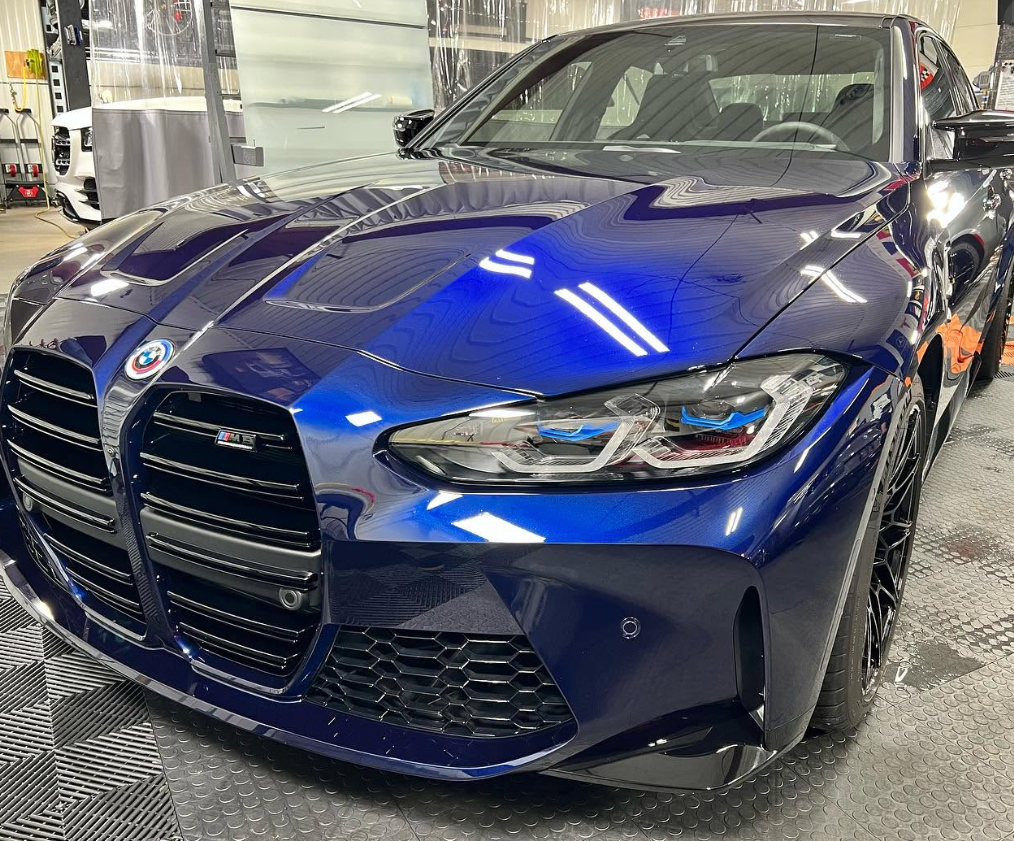
If you want your vehicle to look sharp through a Wisconsin winter, you have probably run into the same two options: ceramic coating and wax. Both add gloss. Both offer some defense against the elements. They are not the same product, and they are not built for the same job. One bonds to your paint and stays there for years. The other sits on top and washes away in weeks. At Tint Studio in Mequon, we answer this question almost every week, so here is a straight comparison of how each one works, what each one costs, and which one fits the way you actually drive.
Ceramic coating is a liquid polymer that bonds chemically to your clear coat and cures into a hard, water repelling layer that can last anywhere from about two years to nine years depending on the product. Wax is a sacrificial layer that rests on the surface, boosts warmth and shine, and breaks down within weeks or a few months. Ceramic coating costs more at the start and holds up far longer. Wax costs very little and needs constant reapplication.
How Each One Protects Your Paint
Ceramic coatings are built around silicon dioxide. Once cured, that layer resists UV fade, bird droppings, tree sap, road film, and the salt brine that covers Ozaukee County roads from November through March. It also resists light marring, which means routine washing is less likely to leave fresh swirls in your finish.
Wax works differently. Carnauba and synthetic waxes form a thin film over the clear coat that takes the abuse instead of the paint. That film is soft, and it breaks down under sunlight, rain, detergent, and heat. It offers real protection while it lasts, but it does not last long, especially through a full Wisconsin summer or a salted winter.
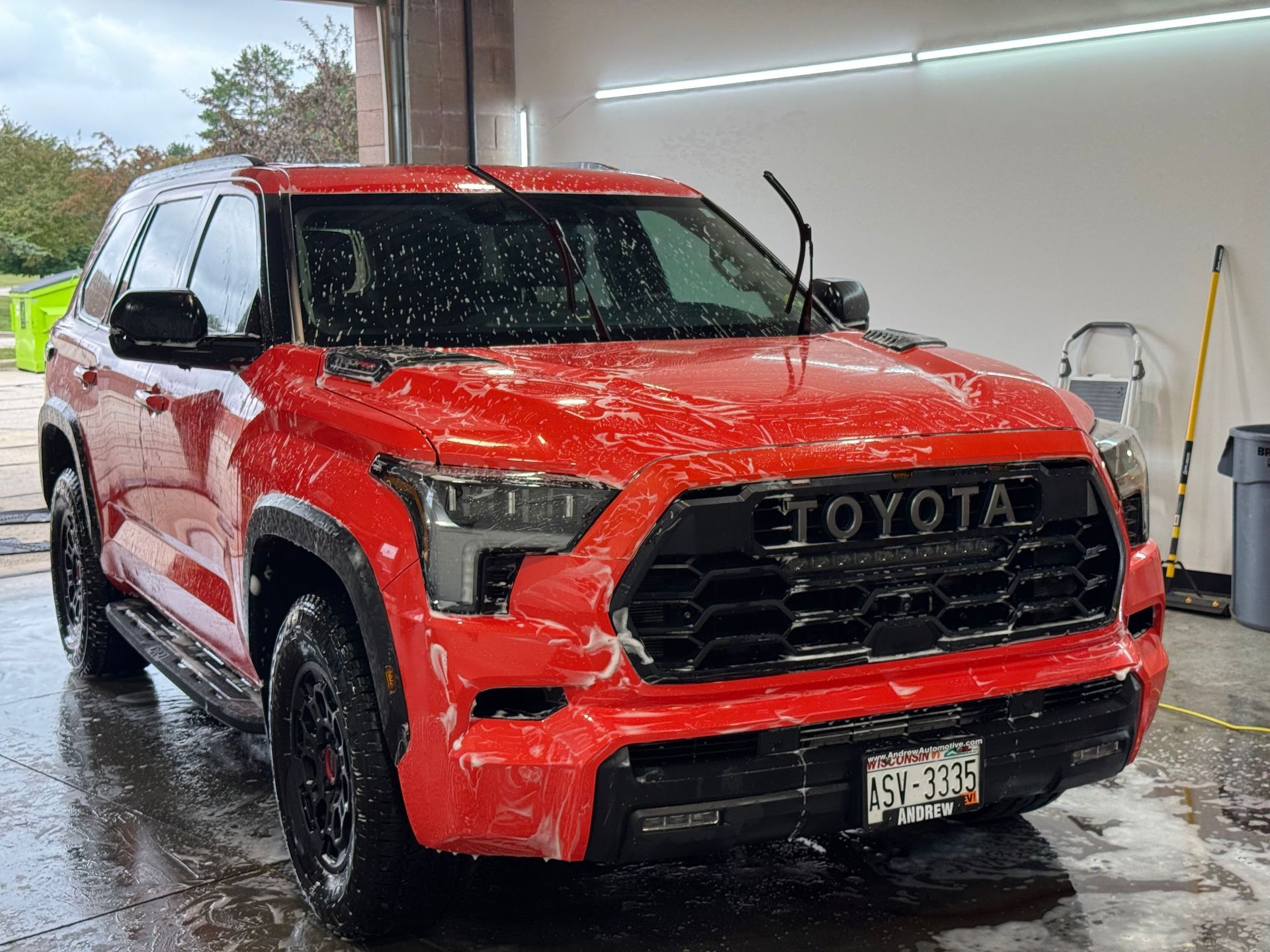
The difference shows up most clearly at wash time. A coated vehicle releases dirt more easily, so the same wash takes less scrubbing and puts less stress on the paint. A waxed vehicle looks excellent the week you wax it and gives that behavior back gradually over the following month.
What Application Actually Involves
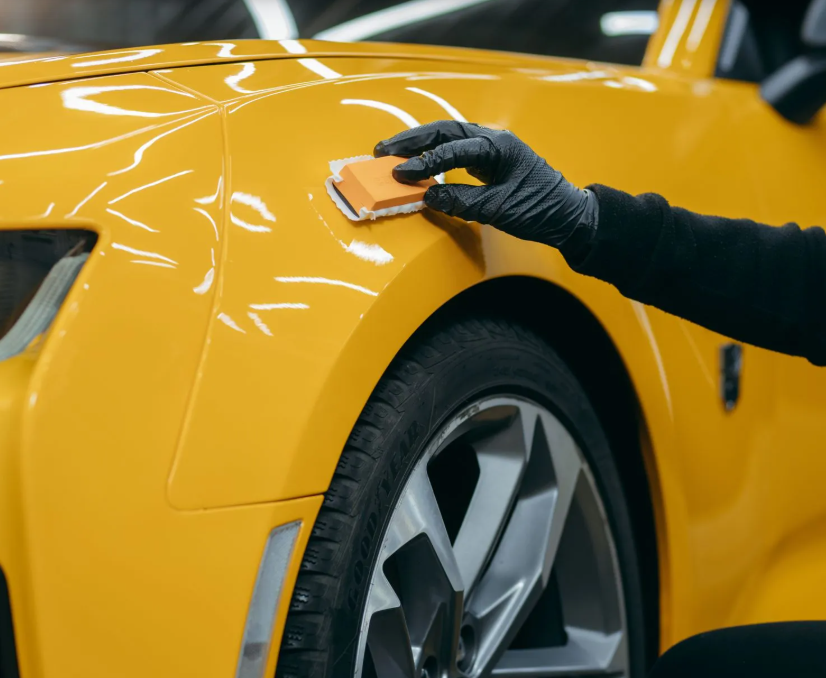
Ceramic coating is not a wipe on product. The paint has to be washed, decontaminated, and corrected first, because a coating locks in whatever sits underneath it. Every ceramic coating package at Tint Studio includes Level 2 paint correction for exactly that reason, so swirls and dullness are removed before anything is sealed in place. The coating then goes on panel by panel in a controlled shop environment and is IR cured so it hardens properly rather than air drying in a driveway.
Timelines depend on the package. Our two layer Gtechniq EXO coating takes one to two days. Crystal Serum Light with an EXO layer also takes one to two days. Crystal Serum Ultra with an EXO layer is a double application and takes two to four days.
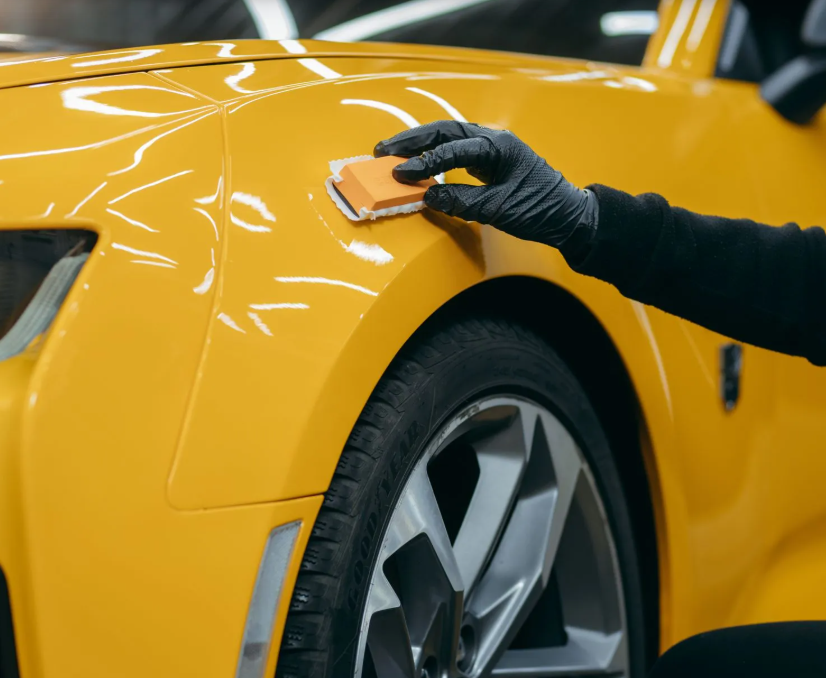
Wax is far simpler. You wash and dry the vehicle, spread the wax with a foam applicator, let it haze for roughly five to fifteen minutes, then buff it off with a clean microfiber towel. Thirty to sixty minutes in your own driveway, with no correction, no curing, and no appointment. That simplicity is the entire appeal.
Longevity and Upkeep
Coating life depends on the product you choose. Our Gtechniq EXO package is a two layer application rated for roughly 18 months to two years. Crystal Serum Light with an EXO layer is rated for six years. Crystal Serum Ultra with an EXO layer is rated for nine years. Each package carries a warranty.
Upkeep is straightforward but not optional. Stick to a proper hand wash or a touchless wash with a pH neutral soap, and skip the automatic tunnels that use stiff spinning brushes. Most owners we work with bring the vehicle back once or twice a year for a maintenance detail and a compatible topper, which keeps the water beading strong through several Wisconsin seasons.
Wax asks for far more of your time. A typical coat holds up for one to three months, and less than that under strong summer sun or repeated winter washing. Keeping a vehicle waxed year round means returning to it every few weeks.

Appearance and Finish
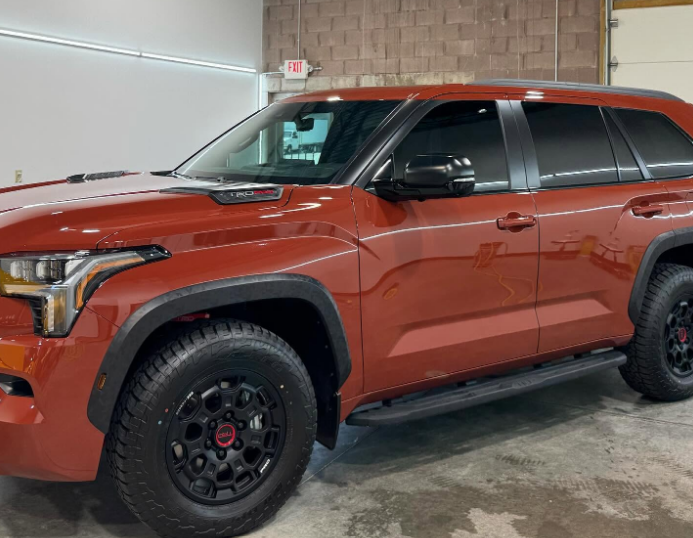
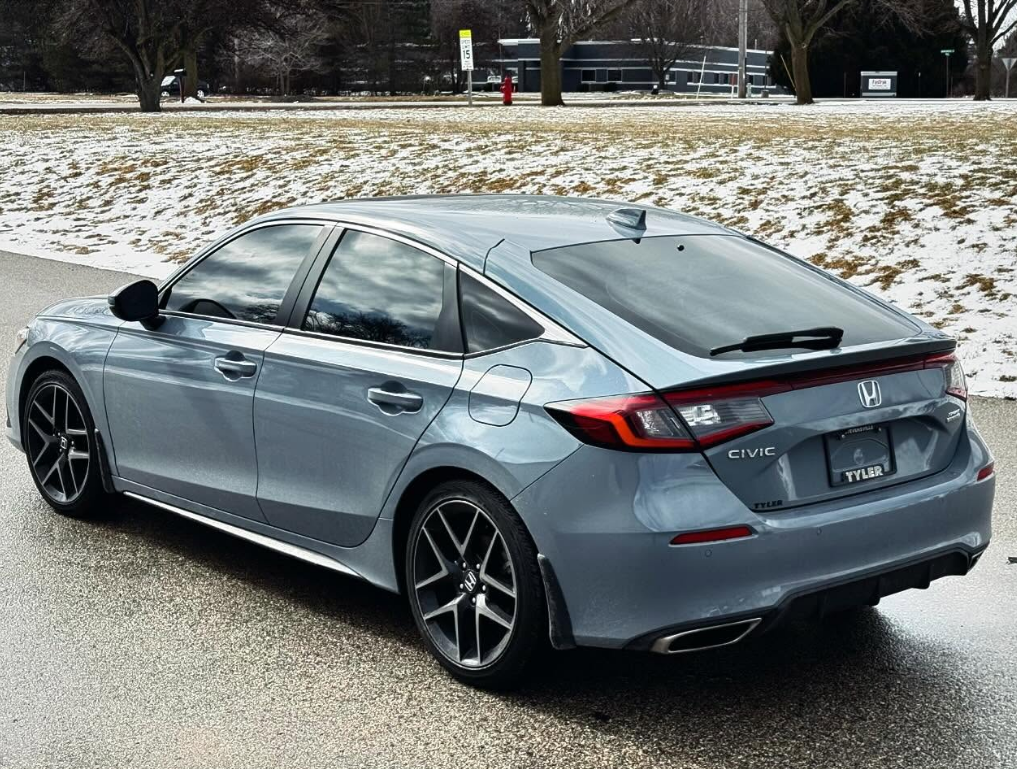
Ceramic coating produces depth. Because the cured layer is smooth and uniform, light reflects cleanly instead of scattering, which gives darker colors a glass like clarity and makes metallics look sharper. That look also holds. The gloss you see on delivery day is close to the gloss you see a year later, as long as the wash routine is sound.
Wax has its own strengths. A quality carnauba delivers a warm, rich glow that many owners genuinely prefer on deep blues, blacks, and reds. The catch is that the glow fades within weeks and needs to be rebuilt by hand each time. If you enjoy the ritual of waxing on a Saturday morning, that is a fair trade. If you would rather wash the vehicle and be done, coating is the better match.
Environmental Considerations
Carnauba wax comes from a plant source, breaks down readily, and involves fairly simple chemistry. Its drawback is repetition, since every reapplication means another container, another set of applicators, and another round of towels.
Ceramic coatings rely on synthetic chemistry and need responsible handling and disposal during application. In exchange, a single application replaces dozens of wax jobs across its service life, and the water repellency means shorter, lighter washes with less product. Neither option is clearly greener in every respect. It depends on how long you keep the vehicle and how often you would realistically wax it.
Cost and Real Value
Wax is inexpensive to buy. A good jar runs roughly $20 to $50, and you supply the labor every one to three months. Over two years that adds up to several jars and a dozen or more afternoons of work.
Ceramic coating at Tint Studio starts at $750 for the two layer Gtechniq EXO package, $1,000 for Crystal Serum Light with an EXO layer, and $1,700 for Crystal Serum Ultra with an EXO layer. Every package includes Level 2 paint correction, IR curing, and coverage of the wheel faces, windshield, all auto glass, and exterior vinyl and plastics, plus a warranty. The correction alone is a significant part of that price, so you are paying for a corrected finish and a protected finish together rather than for a bottle of product.
The honest comparison looks like this. A garage kept weekend vehicle that sees limited miles and gets waxed by an owner who enjoys the process does fine on wax. A daily driver that lives outside, sits in a work parking lot, and runs salted roads all winter is far better served by a coating. The same goes for a leased vehicle you want to hand back in clean condition, or any vehicle where resale value matters to you.
Ready to Protect Your Paint Before Winter?
Tint Studio has been coating vehicles in Mequon since 2021, and we work with owners across Ozaukee County, Milwaukee, and Waukesha. If you are not sure which package fits your vehicle and your driving habits, tell us how you use the vehicle and we will walk you through the realistic options rather than pushing the most expensive one.
Call (262) 278-4003 or schedule your consultation online.
Frequently Asked Questions
How long does ceramic coating last compared with wax?
It depends on the coating. Our packages are rated at roughly 18 months to two years, six years, and nine years. Wax typically holds up for one to three months before it needs to go back on. That gap is the reason coating exists.
Do I still have to wash my vehicle after a ceramic coating?
Yes. A coating makes washing easier and less frequent, not unnecessary. Use a proper hand wash or a touchless wash with a pH neutral soap, and avoid automatic washes with stiff spinning brushes, which can dull the surface over time.
Is paint correction an extra cost?
No. Level 2 paint correction is included in every ceramic coating package we offer. Coating a vehicle without correcting it first would simply lock the existing swirls and dullness in place.
Can I apply ceramic coating myself?
Consumer kits exist, and careful owners do get results from them. The difficulty is not the coating step, it is the decontamination and correction that come before it, plus the controlled environment and IR curing that help the layer harden evenly. Mistakes on a coated panel are corrected by polishing the coating back off, which is why most owners have it done professionally.
Will a ceramic coating stop rock chips?
No. A coating is a chemical barrier measured in microns, so it handles UV, chemicals, road film, and light marring, but it will not absorb a stone thrown from a truck on the interstate. Paint protection film is the product built for impact, and many of our customers combine film on the front end with a coating over the rest of the vehicle.
Does wax still make sense if I already have a coating?
Regular wax is not the right topper for a coated finish and can interfere with how it sheds water. If your beading starts to slow down, a compatible topper applied during a maintenance detail is the better route, and we can handle that when you bring the vehicle in.