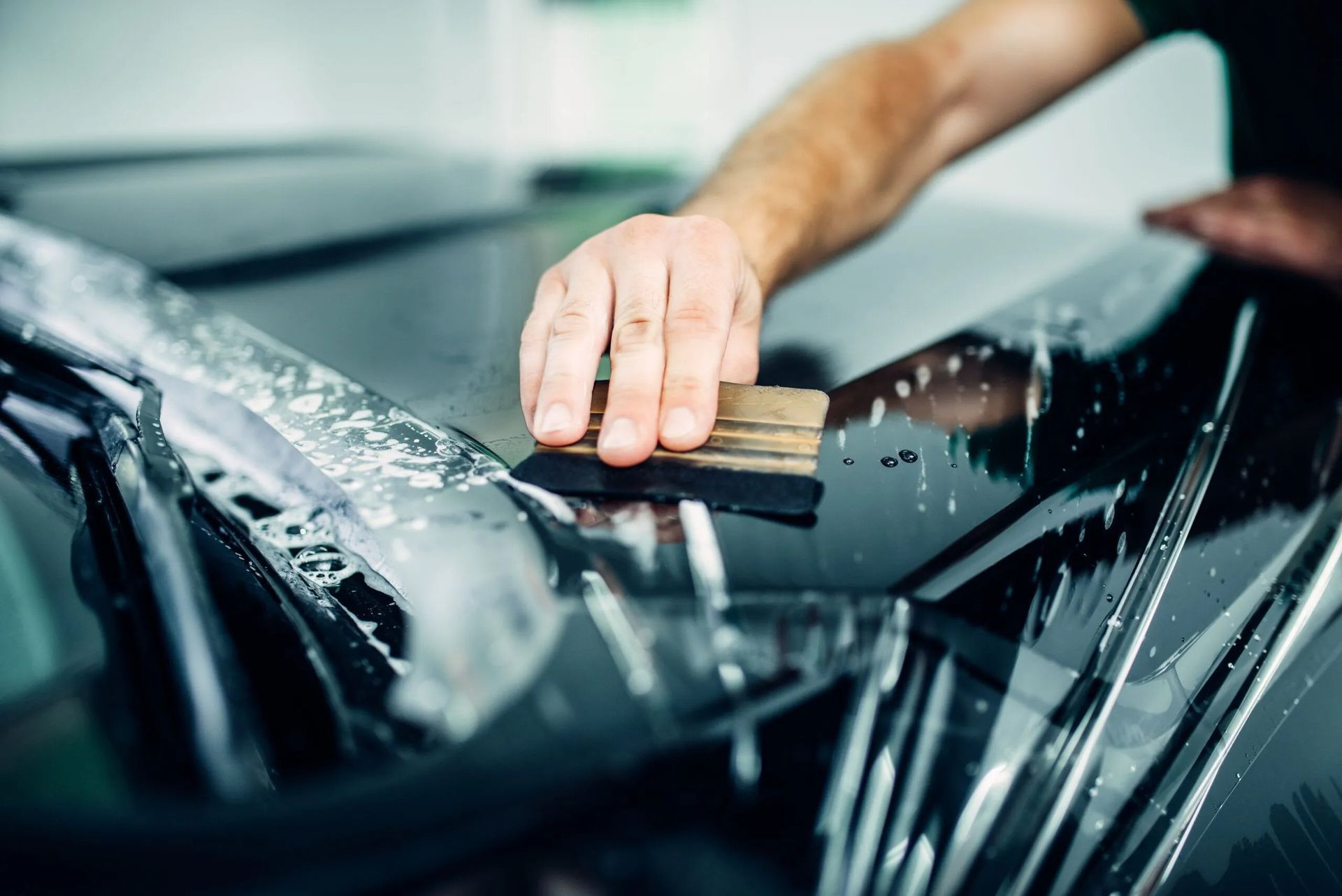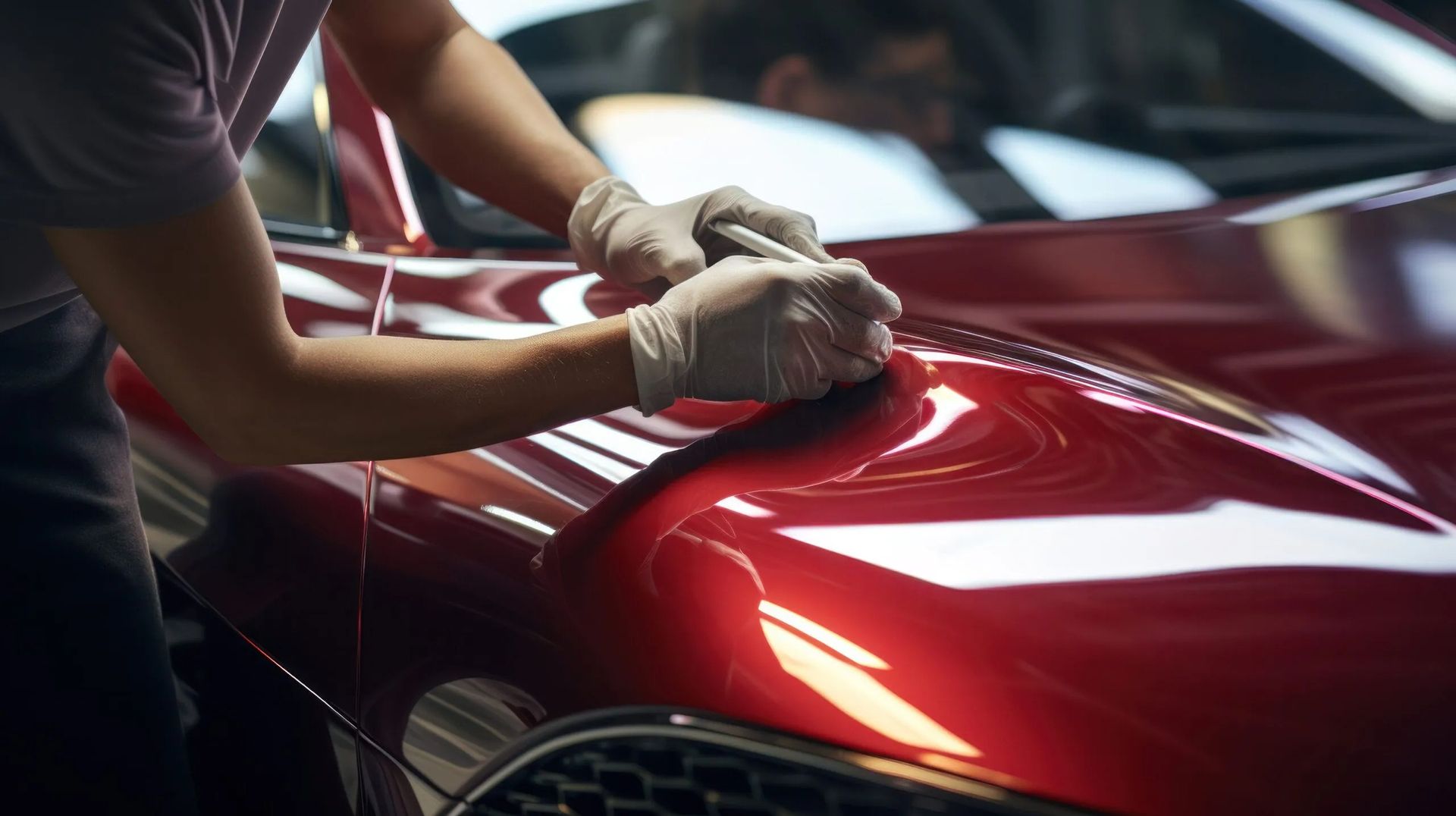
Professional Detailing vs Automatic Car Wash: Which One Does Your Vehicle Actually Need?
TINT STUDIO
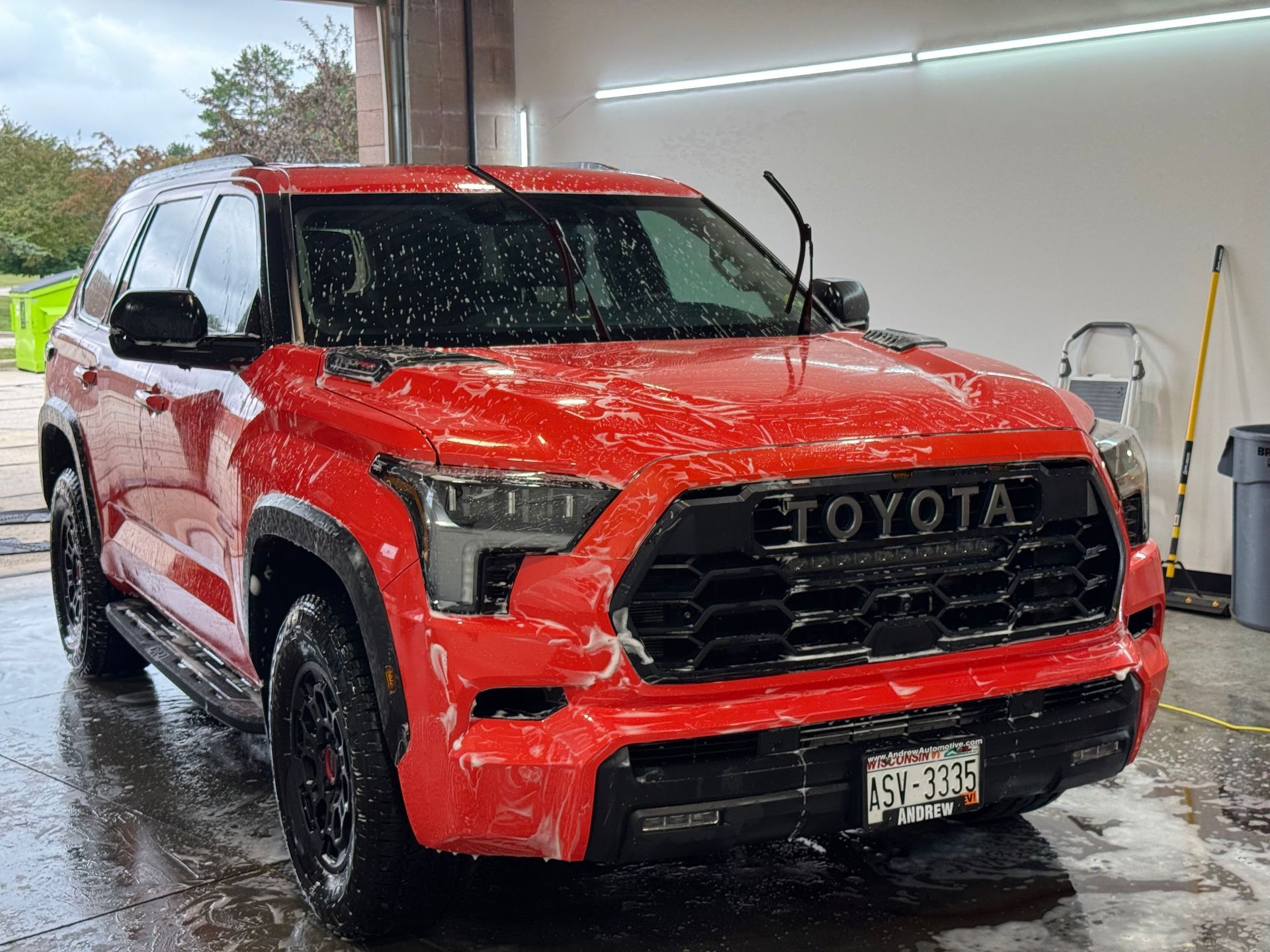
Every Wisconsin driver has the same routine in February. The vehicle is coated in white salt film, you have ten free minutes, and there is an automatic wash on the way home. It works, it is cheap, and the vehicle looks better when you pull out.
So where does professional detailing fit? The two get compared as if you have to pick a side, but they are not the same service and they do not solve the same problem. One keeps your vehicle clean between appointments. The other resets the condition of the paint and the interior. At Tint Studio in Mequon, we detail vehicles year round and we still tell customers to keep washing in between. Here is how the two actually compare.
The Short Answer
An automatic wash removes surface dirt from the exterior in five to ten minutes for somewhere under $20. A full detail is a multiple hour service that decontaminates the paint, polishes out defects, protects the finish, and cleans the interior properly. Washing is maintenance. Detailing is restoration. Most owners need both, just on very different schedules.
What an Automatic Wash Does Well
Frequent washing through winter is genuinely good for your vehicle. Salt brine and road film sit on the paint and in the seams, and leaving them there for months is how surface damage starts. A quick wash every week or two through the salt season is a habit worth keeping, and the convenience is the whole point. No appointment, no planning, no lost afternoon.
The limitation is depth. An automatic wash removes what is loose. It does not remove bonded contamination like tar, brake dust, tree sap, or the industrial fallout that makes paint feel gritty after a season outside. It does nothing for the interior. It cannot correct a defect, and it cannot leave behind meaningful protection.
There is also a real risk depending on which wash you choose. Tunnels with stiff spinning brushes drag grit across your clear coat, and that is one of the most common ways a finish fills with fine swirl marks over a few winters. This is why we tell our customers to use touchless washes or a proper hand wash, and to stay out of brush tunnels entirely. If you have a ceramic coating or paint protection film, that guidance is not optional.
One more limitation is worth naming. An automatic wash cleans the panels you can see. Wheel wells, door jambs, the lower rockers, and the seams where salt collects are exactly the places grime sits longest, and those are the places a machine on a fixed cycle is least likely to reach.
What Professional Detailing Actually Involves
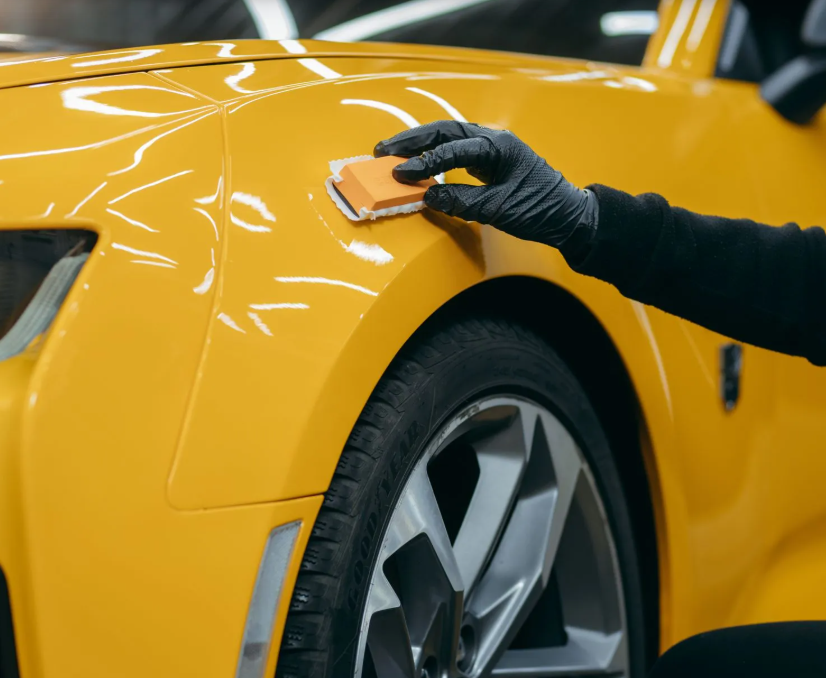
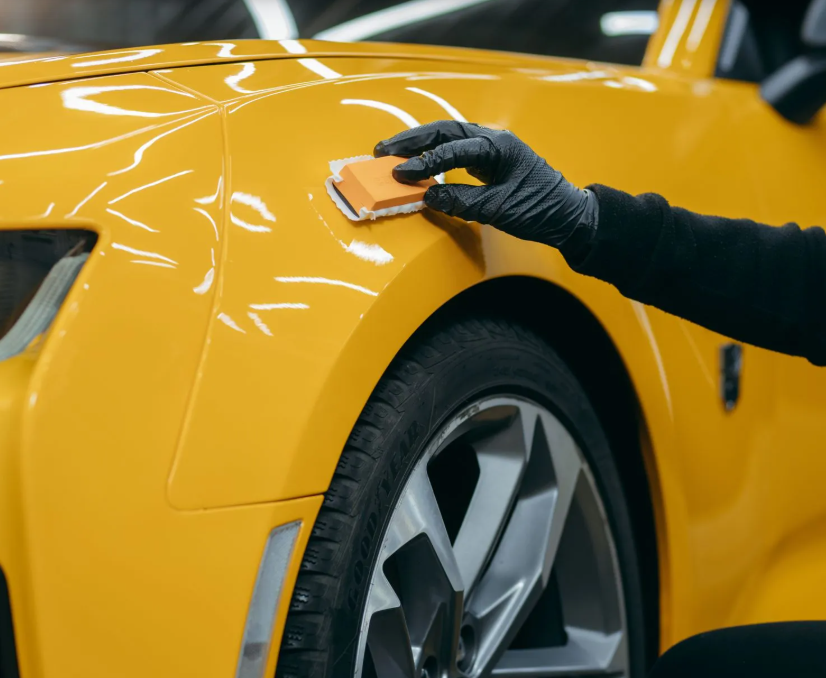
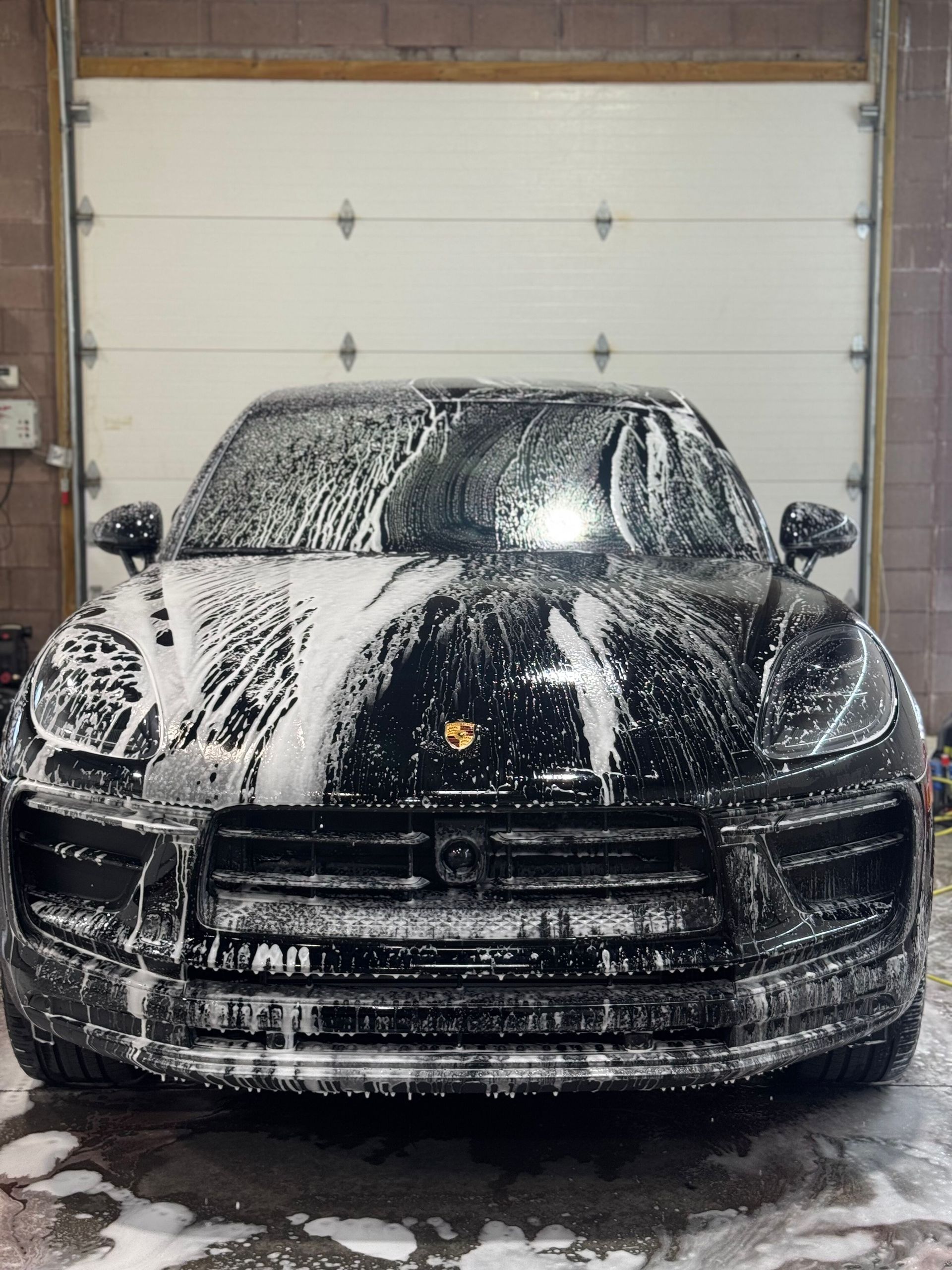
A detail starts where a wash stops. The paint gets a proper hand wash, then decontamination to pull off what soap alone will not lift. From there the work depends on the package: clay bar treatment, polishing to remove swirls and dullness, a sealant or coating to protect the finish, and interior work that covers vacuuming, surfaces, glass, and trim.
At Tint Studio, our full detail packages run from a Lite service starting at $150 and taking roughly two to three hours, to a Pro service starting at $250 at three to four hours, up to the Elite service starting at $350 and taking five to seven hours. The Elite package includes clay bar treatment, single stage polishing with additional correction stages, a paint sealant, an entry level ceramic coating, and an engine bay clean. Headlight restoration and engine detailing are available as add ons starting at $50 each. We also offer exterior only and interior only details when you do not need both, and we detail boats and RVs, not just cars.
The other thing a detail gives you is a set of trained eyes on the vehicle. A chip on the leading edge of the hood, a section of clear coat starting to fail, a stain in the carpet that will set permanently if it sits another six months. None of that gets flagged in a tunnel wash.
How Often You Actually Need Each
This is where a lot of online advice gets it wrong. You do not need a full detail every month. For most daily drivers, one or two full details a year is the right cadence, with lighter maintenance washing in between. Many of our customers schedule one in spring to strip off everything winter left behind, and one in fall to get the vehicle protected before the salt trucks run.
Washing runs on the opposite schedule. Through a Wisconsin winter, every week or two is reasonable, and more often after a heavy salt event. In summer you can stretch it. The point of frequent washing is not appearance, it is keeping corrosive material from sitting on the paint.
If your vehicle has a ceramic coating, the rhythm changes slightly. Washing gets easier and less frequent because the surface releases dirt on its own, and the annual visit becomes a maintenance detail with a compatible topper rather than a full correction.
Cost and Value Over a Year
Run the numbers honestly. Weekly automatic washes at roughly $15 come to a few hundred dollars a year, and you get clean and nothing else. Two full details a year at the Pro level run $500, and what you get is a finish that still has gloss in year five and an interior that does not look tired at trade in time.
Those numbers are closer than most people expect, which is the real point. Detailing is not the expensive option compared to washing. It is a different line item that protects a much larger one, which is the value of the vehicle itself. A hood that needs repainting because chips and salt were left to work on it costs more than a decade of details.
The value case is strongest for vehicles that are worth protecting and are actually exposed. A leased vehicle you will hand back, a truck that works outside all winter, a vehicle you plan to keep for years, or anything where a swirled finish would bother you every time you walk up to it.
Choosing the Right Approach for Your Vehicle
If you commute on salted roads, park outside, and want the vehicle to hold its condition, use touchless washing through winter and book a full detail in spring and fall. That is the standard recommendation for most drivers in Ozaukee County.
If your vehicle is garage kept and lightly driven, one detail a year plus occasional washing is usually enough. If your vehicle is older and the paint has gone flat, start with a detail that includes polishing before you commit to a maintenance routine, because correction has to come before protection.
And if you find yourself washing constantly and still fighting water spots and grime, that is a sign the paint has nothing on it. A detail with a sealant, or a full ceramic coating, will save you far more time than another trip through the tunnel.
Ready to Get Your Vehicle Back to Its Best?
Tint Studio has been caring for vehicles in Mequon since 2021, and we work with owners across Ozaukee County, Milwaukee, and Waukesha. Tell us how you drive and what condition your vehicle is in, and we will recommend the package that fits rather than the largest one on the menu. Spring and fall book up quickly, so it is worth getting on the schedule before the season turns.
Call (262) 278-4003 or request a quote online.
Frequently Asked Questions
How often should I get my vehicle detailed?
For most daily drivers, once or twice a year works well, with regular maintenance washing in between. Spring and fall are the natural times in Wisconsin, one to remove what winter left behind and one to get protection on before the salt season starts.
Are automatic car washes bad for my paint?
Brush tunnels are the problem, not automatic washing itself. Stiff spinning brushes carry grit from the vehicle ahead of you and drag it across your clear coat. Touchless washes are a much safer choice, and a proper hand wash is safer still.
How long does a full detail take?
Our Lite package takes roughly two to three hours, Pro takes three to four, and Elite takes five to seven. Plan to leave the vehicle with us, especially for the Elite service, since polishing and correction cannot be rushed.
Can a detail remove scratches and swirl marks?
Polishing removes or greatly reduces light swirls, wash marks, and oxidation. Our Elite package includes single stage polishing with additional correction stages. Deep scratches that have gone through the clear coat cannot be polished out, and we will tell you which category yours falls into before we start.
Is a detail worth it if I already have a ceramic coating?
Yes, though it looks different. A coated vehicle usually needs a maintenance detail rather than a full correction, which means a thorough decontamination wash and a compatible topper to bring the water beading back. That is the once or twice a year visit that keeps a coating performing through several Wisconsin seasons.
Do you detail anything besides cars?
Yes. We detail boats and RVs as well as cars and trucks, and we offer exterior only or interior only services when that is all you need.
Should I detail my vehicle before selling or trading it in?
It is one of the most cost effective things you can do before a sale. A corrected finish and a properly cleaned interior change how a buyer or an appraiser reads the condition of the vehicle, and the cost of a detail is small next to the difference it can make in what you are offered.